Fakty o Kaszubskich Nutach
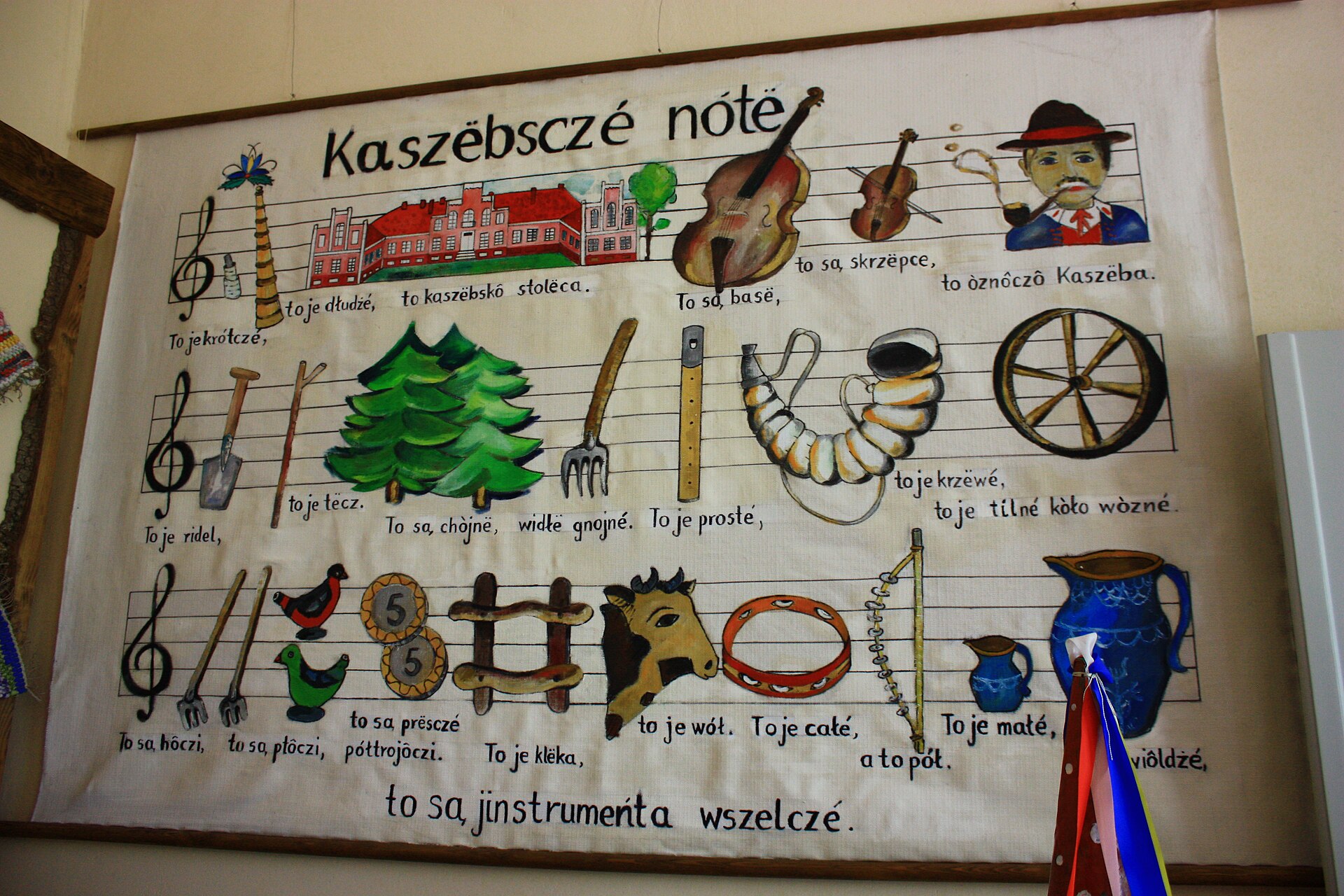
- Forma wykonania: Prowadzący wskazuje wskaźnikiem kolejne rysunki na tablicy, a chór powtarza wersy w coraz szybszym tempie
- Kluczowe motywy: Krosta panna, piérzy bańka, pług, brona, dwa krąglaczi
- Tradycyjne instrumenty: Burczybas (beczułka z końskim włosiem), Diabelskie skrzypce, Bazuna
Jak wykonuje się Kaszubskie Nuty?
Wykonanie pieśni wymaga specjalnej planszy podzielonej na rzędy rysunków. Śpiewak z drewnianym wskaźnikiem intonuje pytania (To je krótczé, to je dłudżé, to kaszëbskô stolëca...), a cała sala odpowiada chórem, powtarzając wszystkie wcześniejsze elementy.
Unique Folk Musical Instruments
Muzyce kaszubskiej towarzyszą unikalne instrumenty obrzędowe: burczybas (drewniana baryłka wydająca basowy pomruk przy pocieraniu pasma końskiego włosia mokrymi dłońmi) oraz diabelskie skrzypce (kij z maską i talerzami perkusyjnymi).